MP3 are the first playlist. Lossless for broadcast, as well as liner notes and lyrics, can be found below. If you need additional material or a different method of download, just send us a note. You clan also download the files as WAV or as MP3.
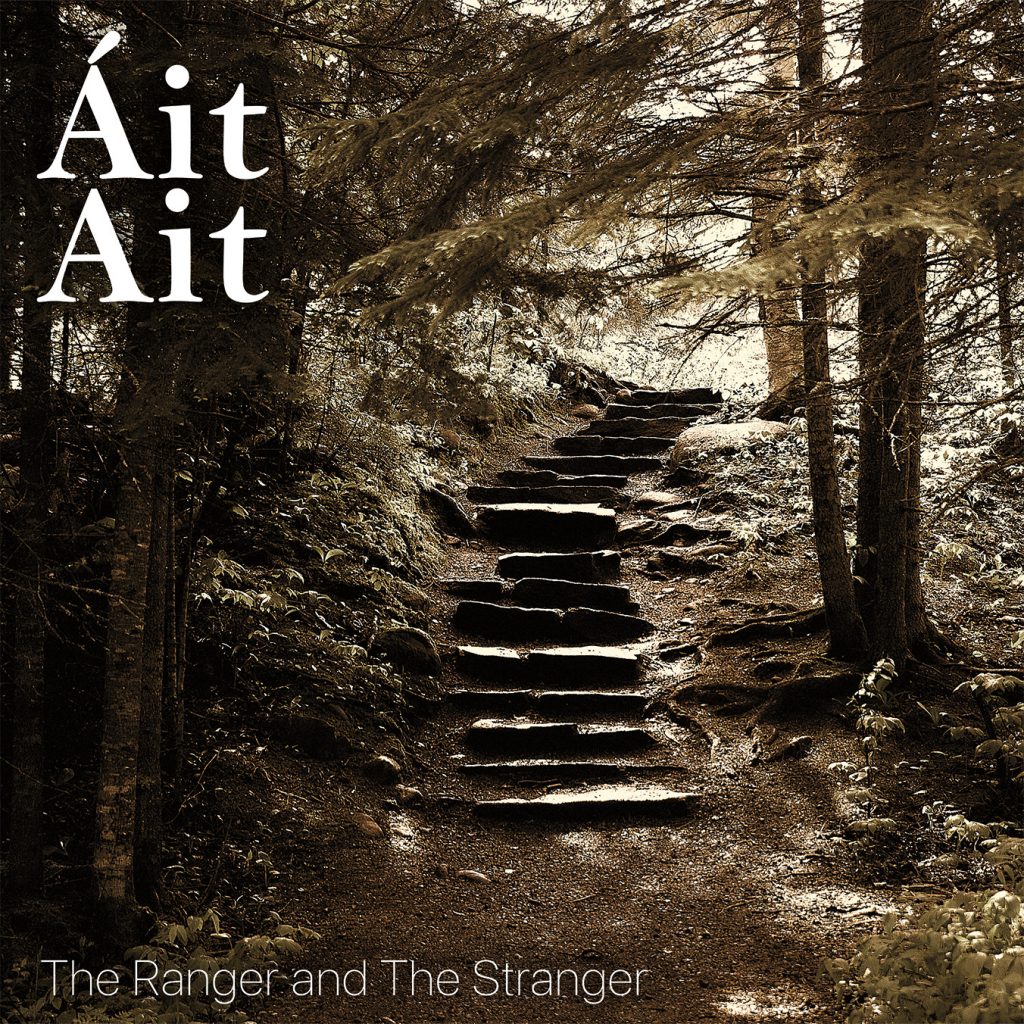
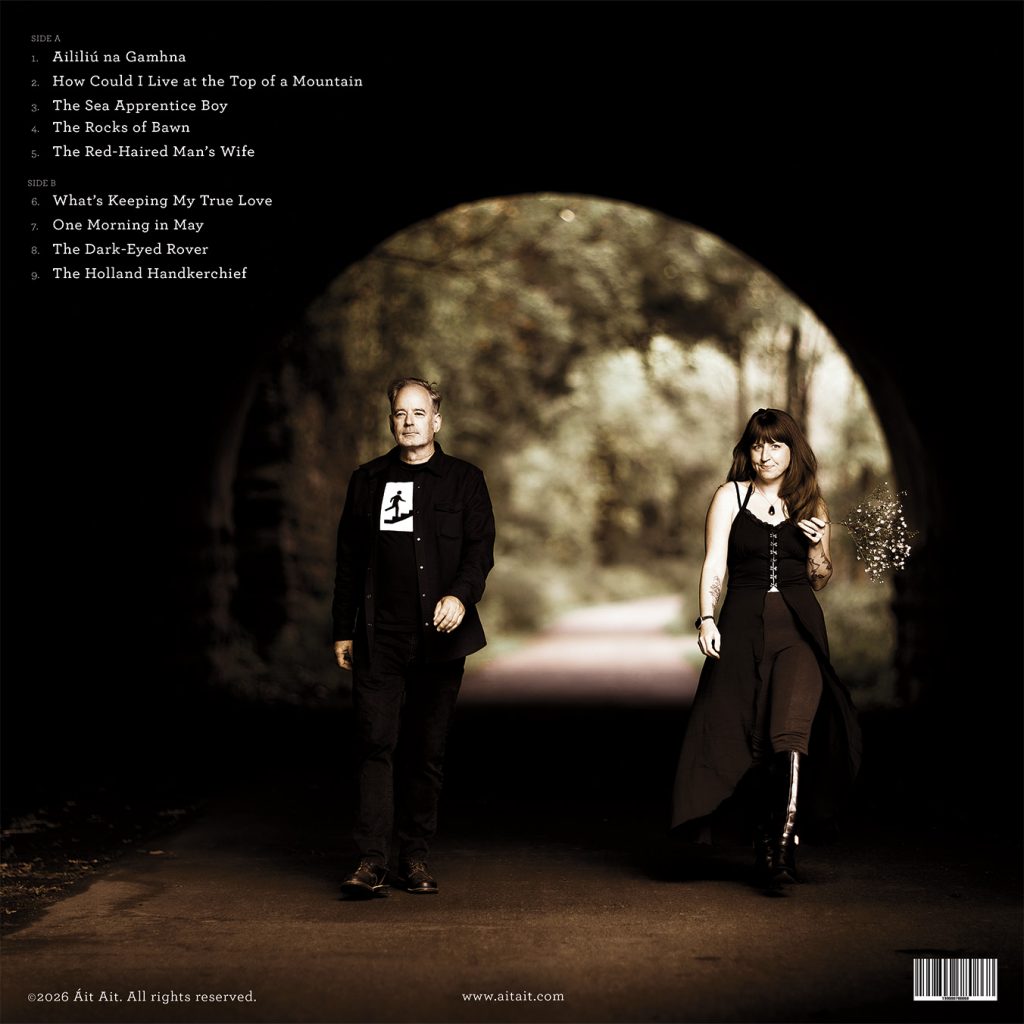
For our full Electronic Press Kit including promo images visit here.
Aililiú na Gamhna
Let’s wander through the winding lanes of traditional song, with stories of love, labor, and the supernatural. Aililiú na Gamhna (“The Cry of the Calves” or “Hallelujah the Heifers”) is an Irish language aisling or vision poem. The origins of this fun and lively song are murky, but it’s believed to originate in the 19th century. The reflections of a young woman and her charges.
Lyrics
Iníon d’aoire mé féinig gan amhras
Do bhíodh ina cónaí cois taobh na Leamhna
Bhí bothán agam féinig is fuinneoga i gceann dóibh
Is nuair a bhíodh an bainne te agam ‘sea ghlaofainn ar na gamhna.
Aililiú na gamhna, na gamhna bána
Aililiú na gamhna, na gamhna b’iad a b’fhearr liom
Aililiú na gamhna, na gamhna geala bána
Na gamhna maidin shamhraidh ag damhsa ar na bánta.
Faightear dom canna ‘gus faightear dom buarach
Is faightear dom soitheach ina gcuirfead mo chuid uachtair
Ceolta sí na cruinne a bheith dá shíorchur i m’chluasa
Is gur bhinne liomsa géimneach na mbó ag teacht chun buaile.
Aililiú na gamhna, na gamhna bána
Aililiú na gamhna, na gamhna b’iad a b’fhearr liom
Aililiú na gamhna, na gamhna geala bána
Na gamhna maidin shamhraidh ag damhsa ar na bánta.
Raghaimid ar an aonach ‘s ceannóimid gamhna
Is cuirfimid ar féarach iad amach ins na gleannta
Íosfaidh siad an fraoch agus barr an aitinn ghallda
Is cuirfidh muid abhaile iad chun bainne i gcomhair an tsamhraidh.
Aililiú na gamhna, na gamhna bána
Aililiú na gamhna, na gamhna b’iad a b’fhearr liom
Aililiú na gamhna, na gamhna geala bána
Na gamhna maidin shamhraidh ag damhsa ar na bánta.
How Could I Live at the Top of a Mountain
We move on to the complexities of the heart with How Could I Live at the Top of a Mountain, also well-known as “The Bonny Blue-Eyed Lassie” or “The Bonnie Blue-Eyed Nancy” and associated with the wonderful singing of Elizabeth Cronin. Emerging from the Irish and Scottish oral tradition of the 18th century, this is a song about choosing love over money.
Lyrics
How could I live at the top of a mountain
With no money in my pocket and no gold for to count it
For I would let the money go, all for to please her fancy
And I would marry no one but my bonny blue-eyed lassie.
She’s my bonny blue-eyed lassie with an air so sweet and tender
Her walk like the swan that floats and her waist so small and slender
Her golden hair in ringlets hung o’er her snow-white shoulder
And I’d ask her for to marry me and there’s no one could be bolder
Some people say that she’s very low in station
And other people say she’ll be the cause of my ruination
But let them all say what they will, to her I will prove constant still
Til the day I die she’ll be my own lovely lady
Lightly swims the swan o’er the dark waters of Eochaill
And blithely sings the nightingale so happy to behold her
The winds do blow, the moorcocks crow, the moon does shine so deeply
Ah but deeper by far is my love for my own lady
Now some people say that she’s very low in station
And other people say she’ll be the cause of my ruination
But let them all say what they will, to me she will prove constant still
Til the day I die she’ll be my own lovely lady
The Sea Apprentice Boy
On to the sea for The Sea Apprentice Boy, also known as “The Apprentice Boy”, “The Sailor Boy” and “The Apprentice Boy in Love”. A young man heads to sea and confesses his love for charming Anne to his captain. The captain tells him that he’s a fool to think she’ll wait for his return and surely she’ll take lovers and marry. Yet hope springs eternal.
Lyrics
When first I went to sea apprentice-bound
I sailed the salt seas all ‘round and ‘round
I scarce had sailed a voyage but one
When I fell in love with my charming Anne
I went to my captain stout and bold
And unto him my secret told
I love yon lass as I love my life
What would I give if she were my wife?
Well, the captain said, “You’re a foolish boy
For to court a girl that you’ll ne’er enjoy
For she’ll have lovers while you’re at sea
And she’ll be married ere you’ll be free “Well, I don’t know but I’ll go and try
For she might fancy an apprentice boy
And she might alter her mind for me
And wait on me until I be free
Well, I bought her ribbons and I bought her gloves
These things to prove of a heart that loves
She accepted all and she was not shy
And she vowed to wait for her apprentice boy
When my ship is anchored and my work is o’er
I’ll steer my barque for sweet Erin’s shore
In my native country, my love I’ll enjoy
And she’ll welcome home her apprentice boy
So come all you sea apprentices where e’er you be
Never slight your true love while you’re at sea
Just love her as you love your life
And she’ll consent to become your wife
The Rocks of Bawn
Back on shore, we delve into the back-breaking labor of The Rocks of Bawn and the singer’s sorrowful complaint about his plight. He is not just bemoaning a difficult job, but the condition of his life—one of poverty and hardship, completely at the mercy of a landlord or harsh master. He’d rather fight for glory in foreign wars than continue this relentless, hopeless toil.
Lyrics
Come all ye loyal heroes wherever you may be
And don’t hire with any master ‘til you know what your work might be
For you will rise up early from the clear daylight ‘til dawn
Or I’m afraid you’ll ne’er be able to plough the rocks of Bawn
My shoes they are worn and my stockings they are thin
My heart is always trembling, afraid I might give in
My heart is always trembling from clear daylight till the dawn
And I’m afraid I’ll ne’er be able to plough the rocks of Bawn
My curse attend you, Sweeney, you have me nearly robbed
You are sitting by the fireside with your dúidín in your gob
You’re sitting by the fireside from the clear daylight till dawn
And I’m afraid you’ll ne’er be able to plough the rocks of Bawn
I wish the Queen of England would send for me in time
And place me in some regiment all in my youth and prime
I would fight for Ireland’s glory from the clear daylight till dawn
And I never would return again to plough the rocks of Bawn
The Red-Haired Man’s Wife
Ah despair! The Red-Haired Man’s Wife, also known as “Bean an Fhir Ruaidh” and “The Nightingale”, is a ballad of the anguish of unrequited love. Our narrator asks his sweetheart to leave her husband, but she has sworn fidelity and married the red-haired man. She will not “break the command”.
Lyrics
Ye muses divine combine and lend me your aid
While I pen these few lines, for I find that my heart is betrayed
By a virgin most pure who is dearer to me than my life
But from me she is flown and is known as the red haired man’s wife
A letter I’ll send with a friend down to the seashore
To let her understand I’m the man that does her adore
And if she’d but leave that slave I would forfeit my life
She’d live like a lady and ne’er be the red haired man’s wife
I offered a favor and sealed it with my own hand
She thus answered and said “Would you lead me to break the command
So take it easy, since nature has caused so much strife
I was given away and will stay as the red haired man’s wife.”
May my life never end nor my yearning for passion abade
Til I and my darling recline neath the pleasant tree’s shade
No one to be near us but the blackbird in the green leaves alone
And the red headed man in his grave with his head neath the stone
My darling sweet phoenix if now you would be my own
For the patriarch David had a number of wives it’s well known
So yield to my embraces and straight put an end to all strife
Or else I’ll run crazy or gain the red haired man’s wife
What’s Keeping My True Love
More heartbreak greets us with the lovely Ulster song What’s Keeping My True Love, derived from an even older ballad “Green Grass it Grows Bonny” or “Green Grows the Laurel”. A story as old as time. He waits for her, but she has two loves.
Lyrics
I wonder what’s keeping my true love tonight
I wonder what’s keeping her out of my sight
It is little she knows of the pain that I endure
Or she would not stay from me this night, I am sure
Oh love, are you coming your cause to advance?
Oh love, are you waiting for a far better chance?
Or have you got a sweetheart laid by you in store?
And you’re coming to tell me that you love me no more?
Oh love, I’m not coming my cause to advance
And love, I’m not waiting for a far better chance
But I have got a sweetheart laid by me in store
And I’m coming to tell you that I love you no more
For I can love lightly and I can love long
And I will love the old love ‘til the new love comes along
I just said that I loved you to set your mind at ease
But when I’m far from you, I’ll love whom I please
I’ve gold in my pocket and love in my heart
But I can’t love a maiden who has got two sweethearts
Your love it lies lightly as the dew upon the thorn
Comes down in the evening, goes away in the morn
Green grass, it grows bonny, spring water runs clear
I am weary, I am weary, for the love of my dear
You’re my first and false true love and lately I knew
That the fonder I loved you, the falser you grew
One Morning in May
One Morning in May shows us the deceit of the ranger through the familiar story of a young man seducing, then abandoning, a fair maiden. With its flowery language and classical references to Venus and Diana, this song is likely from the northern Irish “hedge school” tradition, which saw the rise of covert outdoor schools in defiance of the outlawing of Catholic education. Many of the hedge schoolmasters were formerly poets, and it shows.
Lyrics
One morning in May as I carelessly did stray
To view yon green meadows and the lambs sport and play
In the clear morning dew, as I lay down to muse
A fair maiden of honor appeared in my view
Says I, “Pretty fair maid, how happy we could be
For it is so ordained love that married we should be
Let me not see you frown, for this heart is your own.”
When these words they were spoken, sure the tears trickled down
“Come dry up your tears, there is nothing to fear
I will roam through the green fields for many’s the long year.”
While the birds sang so sweet, this young man proved his deceit
Saying “Adieu, pretty fair maid, we shall never more meet.”
With my snuffbox and cane the whole world I would range
Like Venus or Diana in search of her swain
While the moon does shine clear, I will mourn for my dear
Over mountains, clear fountains, where no one would hear.
There’s one thing I know, and that before I go,
I will never return for to hear your sad woe
And there’s another thing I know, and that before I go
That the ranger and the stranger have many’s the foe.
The Dark-Eyed Rover
The Dark-Eyed Rover is commonly known by a name that is now considered a pejorative. While the songs we perform are old, Irish music is an oral tradition and is ever-changing, placing it firmly in the realm of living tradition rather than moribund curiosity. In this tale, a lord comes home to find his lady has run away with the dark-eyed rover. He saddles his fastest horse to give chase. He finds her and bids her come home; she will not return, preferring the cold ground and the rovers’s company to wealth and a fine bed.
Lyrics
There were three rovers lived in the East,
And they were braw and bonnie O,
They sang so sweet at the castle gate,
That they charmed the heart of the lady, O.
She gave to them the sparkling wine
She gave to them the brandy, O,
And the gay golden ring that the lady wore,
She gave to the dark-eyed rover, O.
When the lord of the castle he came home,
And enquired for his lady, O,
“She is gone, she is gone” said the young servant boy,
“She’s away with the dark-eyed rover, O.”
“Come saddle for me my milk white steed,
The bay is not so speedy, O,
And I’ll ride for a day and a long dark night,
Till I find my own wedded Lady, O.”
He put the spurs unto his horse,
And off he rode so speedy, O,
Until he fell in with his own wedded love,
Along with the dark-eyed rover, O.
“Will you forsake your house and land?
Will you forsake your children three?”
“I would leave them all for the one I love,
And I’ll follow my dark-eyed rover, O.”
“Last night I lay on a fine feather bed,
My own wedded lord beside me, O,
But tonight I’ll lie on a cold barn floor,
In the arms of my dark-eyed rover, O.”
The Holland Handkerchief
We end our journey in the realm of the supernatural with The Holland Handkerchief. This is a ghost story, and a spooky one at that. Also known as “The Suffolk Miracle”, this song dates back to the 16th century, making it most likely the oldest on this album. It is one of the many “corpse lover” ballads found in European tradition, where a lover returns from the dead for a final meeting. Our version is based on the amazing rendition of sean-nós singer Packie Manus Byne.
Lyrics
A wealthy squire lived in our town.
He was a man of high renown.
He had one daughter, a beauty bright,
And the name he called her was his heart’s delight.
Many young men to court her came,
But none of them could her favour gain,
Till there came one of a low degree
And above them all she had fancied he.
But when her father he became to know
That his lovely daughter loved this young man so,
Over fifty miles he sent her away
All to deprive her of her wedding day.
One night as she lay in her bedroom,
Her love appeared from out the gloom.
He touched her hand and to her did say,
“Arise, my darling, and come away.”
’Twas with this young man she got on behind,
And they rode swifter than any wind.
They rode on for an hour or more
Till he cries, “My darling, my head feels sore.”
A Holland handkerchief she then drew out,
And with it wrapped his aching head about.
She kissed his lips and these words did say,
“My love, you’re colder than any clay.”
When they arrived at her father’s gate,
He said, “Get down, love, the hour is late.
Get down, get down, love, and go to bed,
And I’ll see this gallant horse is groomed and fed.”
And when she rapped at her father’s hall,
“Who’s that? Who’s that?” her own father called.
“Tis I, dear Father; didn’t you send for me
By such a messenger?” naming he.
“Oh, no, dear Daughter, that can never be.
Your words are false and you lie to me.
For on yon far mountain your young man died
And in yon green meadow his body lies.”
The truth then dawned on this maiden brave,
And with her friends they exposed the grave,
Where lay her young man though nine months dead
With a Holland handkerchief around his head.